Most cleanouts we run in Woodland Hills start the same way. A homeowner opens a garage off Ventura Boulevard, finds a stack of half-used paint cans, and assumes we will take it all. California law makes that call for us. The Hazardous Waste Control Law draws a hard line between the couch and the solvent sitting next to it, and that line sets what we can legally load onto our truck.
You deserve to know where that line falls before we arrive. Homeowners, landlords, and Warner Center property managers all carry responsibility for what leaves their property, and a hauler who ignores the rules pushes that risk back onto whoever hired them.
What the Hazardous Waste Control Law Actually Covers
California enacted the Hazardous Waste Control Law, or HWCL, in 1972 as Chapter 6.5 of Division 20 of the Health and Safety Code, starting at Section 25100. The Department of Toxic Substances Control administers it, and Title 22 of the California Code of Regulations holds the operating detail. Hazardous waste means a discarded material toxic, corrosive, flammable, or reactive enough to threaten people or the environment. That definition covers more garage inventory than residents expect.
California also enforces a stricter program than the federal one. The U.S. EPA lets states set standards tougher than the federal baseline, and California uses it hard. Some materials count as hazardous waste here even when federal rules would let them pass, a category the state calls non-RCRA hazardous waste.
The Household Exemption Most Residents Misread
Home waste gets limited relief under the regulations, which is why we move an old dresser without a permit. That relief stops well short of dumping. CalRecycle states plainly that hazardous waste stays off-limits for curbside trash, storm drains, and open ground, and Health and Safety Code Section 25218 sets how local agencies collect it instead.
A second category trips people up. Universal waste covers common items the state regulates under streamlined rules: batteries, electronics, fluorescent lamps, mercury thermostats, and aerosol cans. Non-working cathode ray tubes, the heavy glass picture tubes inside older televisions, count as hazardous waste outright. Senate Bill 1215 widened the electronic waste program on January 1, 2026 to cover battery-embedded products, so cordless tools now follow the same path as the monitors we pull during an appliance removal.
Why Woodland Hills Sees More of This Than Most Neighborhoods
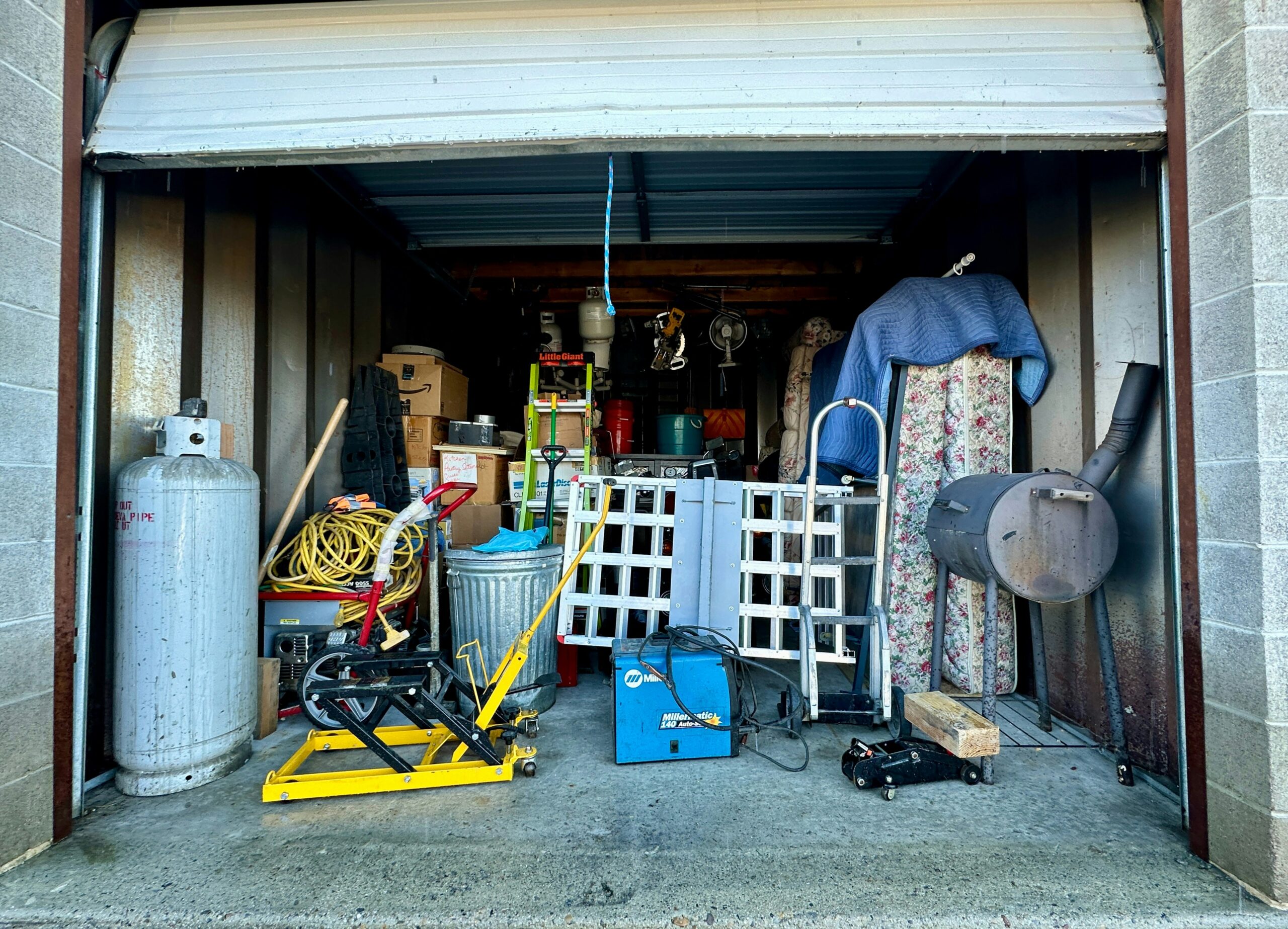
Our office sits on Oxnard Street in Woodland Hills, so we watch this pattern repeat weekly. The west end of the San Fernando Valley posts some of the highest summer temperatures in Los Angeles County, and sustained garage heat degrades stored chemicals. Aerosol cans swell, solvent containers weep, and lithium batteries in a hot toolbox become a fire risk.
The housing stock adds another layer. Many homes south of the 101 date to the 1950s and 1960s, an era of oil-based paints, lead primers, and pesticides no longer sold at retail. Hillside properties near the Santa Monica Mountains also collect pool chemicals, generator fuel, and brush-clearance gear, all restricted under the HWCL. We find the same materials behind spa cabinets on hot tub removal jobs.
Los Angeles County and the City both run collection programs for this reason. Residents can use permanent centers and weekend roundups offering free drop-off for paint, batteries, electronics, and motor oil. Those programs handle residential quantities, so a full estate clearout or an active job site rarely fits their limits.
Where Landlords and Businesses Carry Real Liability
Commercial waste sits in a different regulatory world. A business that discards hazardous material becomes a generator under the HWCL, which means an EPA identification number, correct waste classification, and a Uniform Hazardous Waste Manifest for every shipment. That manifest follows the load through final treatment, and the generator’s name stays on it permanently.
Transportation carries its own rule. California requires anyone hauling hazardous waste to register as a transporter with the Department of Toxic Substances Control and to carry that registration on the job. Violations expose responsible parties to civil penalties reaching tens of thousands of dollars per violation, per day. We raise this early on commercial junk removal jobs, because an unregistered hauler never moves that exposure off the property owner.
Questions We Tell Every Client to Ask a Hauler
Ask these before anyone backs a truck up your driveway. We answer them the same way every time:
- Which materials will you refuse? A crew that claims it takes everything either misreads the law or plans to ignore it.
- Where does the material actually go? Real answers name permitted treatment, storage, or disposal facilities, not “the dump.”
- Do you separate universal waste on site? Batteries, lamps, and electronics need segregation before transport.
- Will you provide documentation? Businesses need manifest copies for their records.
- Are you licensed and insured for this work? General hauling coverage is not hazardous materials capability, and we built our company on that gap.
Straight answers point to a crew that has read the regulations. Vague ones mean your paint cans end up in a canyon.
Clearing Your Woodland Hills Property the Right Way
Knowing where the legal lines fall makes your next call easier. At Malibu Junk Removal we handle residential and commercial cleanouts across the San Fernando Valley, and we treat hazardous waste removal as its own discipline, not an afterthought. We sort regulated items on site, deliver them to certified processing facilities, and aim to recycle or donate 60 percent of every load we haul, with landfill as our last resort.
We handle everything around those materials too, from garage and estate property cleanouts to construction debris hauling and specialty items. Our pricing stays transparent, we arrive in a two-hour window, and we carry the license and insurance this work demands.
When you are ready to clear a property without inheriting a compliance problem, get in touch and we will walk through exactly what we can take.


